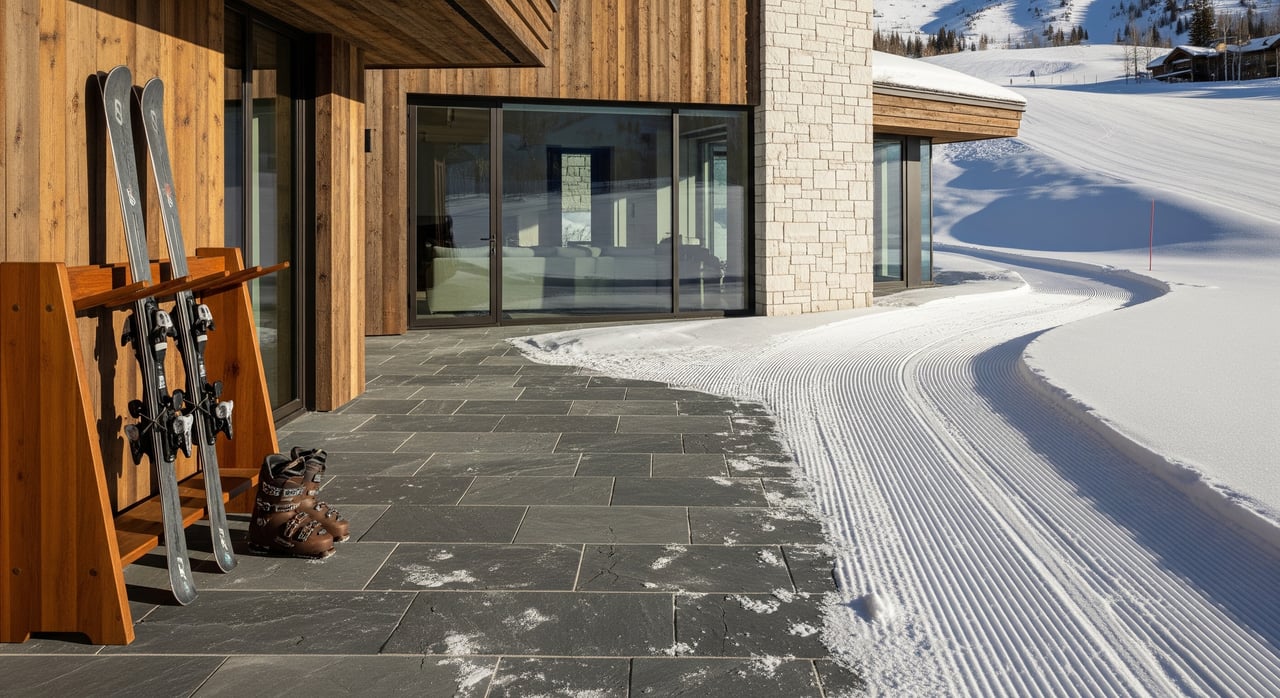
Think every Beaver Creek condo that says ski-in/ski-out delivers the same experience? In reality, that label covers a wide spectrum, from true door-to-run access to a five-minute walk with a road crossing. If you are buying a second home, you want a setup that works for your lifestyle every day of the season, not just under perfect conditions. In this guide, you will learn how to decode listings, what to verify on the ground, and the trade-offs that matter most. Let’s dive in.
What ski-in/ski-out means here
Many buyers picture stepping out, clicking in, and sliding to a lift with no interruptions. That expectation usually means no long walks, no road crossings, and a groomed path that is easy for a wide range of skiers. Marketers often use the term more broadly, sometimes for homes one block from a lift or with a short flat walk across a plaza. That is why you should always verify exactly how the route works.
Beaver Creek spans several areas that handle slope access differently. The village core is compact and designed for pedestrian movement, with lifts and services clustered together. Bachelor Gulch, Arrowhead, and slope-side developments have different slope angles, lift placements, and grooming patterns. Those details shape how seamless daily access really is.
Lifts, grooming, and grades
Lift proximity and direction
The closer you are to a lift or unloading area, the more reliable your ski-in/ski-out experience. Being adjacent to a lift reduces your dependency on trail conditions or skier skill. Pay attention to direction too. A run next to your building may lead to a different area than the lift you plan to use each morning, which can add time or complexity. Remember that properties that depend on a single lift can be disrupted by temporary closures.
Groomed routes and snowmaking
Most practical access in and around the village uses groomed trails that mountain operations maintain on a regular schedule. Nightly or morning grooming helps keep entries and exits smooth rather than icy or tracked out. If the only path between your unit and the lift is ungroomed or steep, many families will not find it practical. Lower elevation connectors with snowmaking often hold up better in early and late season.
Run grade and skier ability
Gentle green and blue corridors near the village offer broad usability for mixed-ability groups. If the return to your property requires a black or double black chute, many guests will avoid it on tougher days. Confirm that there is a groomed, safe way back that matches your intended skier ability. Outbound and inbound routes can differ, so check both directions.
Weather, wind holds, and timing
Wind holds, operational changes, or avalanche work can affect lift openings and routes during a given day. Grooming windows also matter. Properties beside runs groomed nightly will usually provide more consistent first-chair access and end-of-day predictability. If access relies on a route that is only sometimes groomed, plan for variation.
Common configurations in Beaver Creek
Direct door-to-run
This is the highest standard. You open a door and step onto a recognized groomed run or a maintained traverse that feeds directly to a lift. There are no road crossings, no stair climbs, and minimal walking in ski boots. You get the most consistent experience across seasons and conditions.
Short ski or flat walk to a lift
A short, flat, paved, or groomed path in the 0 to 5 minute range is very usable for most owners. You might carry skis through a lobby or across a small pedestrian bridge to reach the lift plaza. It is seamless enough for daily use, especially if the path is well maintained. Note any small obstacles, like a single set of steps or a narrow corridor at peak times.
Short walk with a crossing or plaza
This works for many buyers, but it is a step down in convenience. Expect a 5 to 10 minute walk that could include crossing a village street or plaza. Consider how that feels with children, guests, or luggage on a busy weekend. It may still be a great option if you value nearby shops and services more than pure door-to-run access.
Near-slope or walk-to-lift
These properties are often marketed as slopeside but require a longer stroll, multiple staircases, or crossing public streets. For some buyers this is acceptable at the right price or location. Just do not confuse it with true ski-in/ski-out if daily seamless access is your priority.
Shuttle-reliant access
Free resort shuttles are convenient and can save parking headaches. They are not ski-in/ski-out because you must remove your skis and board a vehicle. For some owners the trade-off is worth it for privacy, space, or price. If your expectations require on-snow routes, keep looking.
How to verify any listing
Start with official maps and documents
- Use the resort trail map to identify the runs next to the property and the nearest lift loading and unloading areas.
- Review county parcel or GIS maps to confirm property lines, public roads, and easements. This helps you spot whether a “ski path” crosses public property.
- Check HOA or condominium plat maps for designated ski corridors and who is responsible for maintaining them.
Test the route on site
- Visit in season and in different conditions when possible. Observe end-of-day flows and morning grooming.
- Put on your boots, bring your skis, and time the route from the unit to the lift. Note obstacles like stairs, narrow spots, or road crossings.
- Confirm where skis live. Look for ski rooms, exterior racks, heated storage, and boot-drying areas that streamline your routine.
Ask targeted questions
- Is the access route part of the grooming plan and typically groomed nightly?
- Does access require crossing a public road, and if so, is there a safe crosswalk or staffed assistance?
- Are there easements or rights-of-way that affect the path today or in the future?
- Have lifts, runs, or gondola placements changed recently, or are changes planned?
- Who clears snow on the approach from the building to the run or plaza?
Request visual proof
- Ask for recent winter photos and short video of the route from the unit to the lift.
- Review floor plans to see entry orientation and the path to ski storage.
- Request HOA meeting minutes or policy statements that mention slope access and any special assessments for corridor upkeep.
Cover legal and inspection items
- Confirm building code or fire egress requirements that could affect how you move from the unit to the slope.
- Review deed restrictions and covenants for any language about ski access, signage, or maintenance obligations.
Smart trade-offs for second-home buyers
Rank what matters most before you tour. Some buyers want door-to-run immediacy. Others prefer the village core for dining, skating, or proximity to children’s programs. A five-minute walk might be worth it if it puts you steps from services you will use every day.
Bring the right people to the property. A buyer’s agent with deep local experience, an HOA representative if possible, and even a mountain operations contact can explain grooming patterns and typical early or late season scenarios. Ask for season-specific examples, like first-chair routes on powder days and return paths on busy holidays.
Think about storage and staging. Quick access often comes down to where you put skis, how you dry boots, and whether you can step out from a ground-level exit. A well-located ski room can make a short flat walk feel almost as easy as true slopeside.
Put key items in writing. Marketing language is not a guarantee. If ski access is mission critical, consider a contingency that allows you to verify routes during your inspection period. That way your expectations and the property’s daily reality are aligned before you close.
The bottom line
In Beaver Creek, ski-in/ski-out is not a single promise. It is a spectrum shaped by lift placement, grooming, run grades, and building siting. When you verify with maps, on-site tests, and HOA documents, you can confidently compare options and pay for the access you will actually use.
If you want a guide who pairs construction literacy with on-mountain context, reach out for tailored advice. For a confidential conversation about your Beaver Creek search, connect with Patrick Scanlan - Main Site to schedule a market strategy consultation.
FAQs
What does ski-in/ski-out mean in Beaver Creek?
- It ranges from true door-to-run access to short walks across plazas, so you should verify the exact route, obstacles, and grooming.
How do lifts and grooming affect access?
- Close proximity to a lift and routes that are groomed nightly provide the most reliable daily access in all conditions.
Do green and blue runs matter for access?
- Yes. Gentle green or blue corridors make access easier for mixed-ability groups, while black-only returns limit usability for many owners.
Is a short flat walk considered ski-in/ski-out?
- Many buyers accept a short, flat, well-maintained walk as effectively ski-in/ski-out, but purists reserve the term for true door-to-run.
Do shuttle-served buildings count as ski-in/ski-out?
- No. Shuttles are convenient, but they require removing skis and boarding transportation, which is not ski-in/ski-out.
How seasonal are ski access claims?
- Access can change with snow depth, grooming schedules, and lift operations, so verify in the part of the season you plan to use the home most.