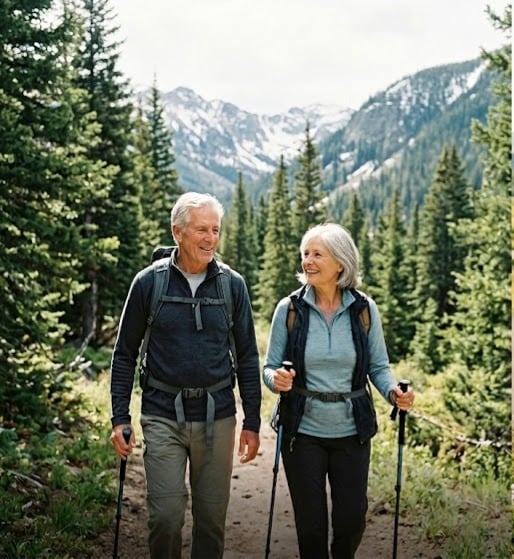
Everyone has a reason for looking at a new property. For some, it’s about downsizing or upsizing; for others, it’s the dream of living closer to the slopes or having a backyard on the river. But recently, I have noticed a very specific trend among my clients in their 60s and 70s: moving down-valley from Vail to Edwards simply for a change in altitude.
Those who have made the move consistently share the same feedback: they sleep more soundly, have more energy throughout the day, and overall, they just feel better.
There is a distinct kind of magic to life in the Colorado Rockies. Waking up to crisp air, sipping coffee while looking out over snow-dusted pines, and enjoying an active, outdoor lifestyle is exactly why so many people choose to spend their golden years in the Vail Valley. But if you are in your 60s or 70s, making the mountains your home—whether part-time or year-round—comes with a very real, invisible variable: the oxygen.
While the mountain air is pristine, it is undeniably "thinner." Understanding how altitude affects an aging body is crucial for ensuring your time in the high country is spent enjoying the trails and slopes, rather than recovering on the couch. Let’s dive into the science of oxygen, how your body reacts to it as you age, and look at a real-world comparison right here in the valley: living at 8,325 feet on Forest Road in Vail versus 7,300 feet in Arrowhead at Edwards.
The Science of "Thinner" Air
At sea level, the air we breathe contains about 20.9% oxygen. As you go higher in elevation, the actual percentage of oxygen in the air remains the same, but the barometric pressure drops. This means the air molecules are less dense, so with every breath you take, your lungs take in fewer oxygen molecules.
Here is how the "effective oxygen" breaks down for our two local elevations:
- Sea Level: 20.9% effective oxygen
- Arrowhead in Edwards (7,300'): ~15.9% effective oxygen
- Forest Road in Vail (8,325'): ~15.2% effective oxygen
It might not look like a massive gap on paper, but a drop of 5% from sea level is a major physiological change. Furthermore, that roughly 1,000-foot difference between Edwards and Vail is often the critical tipping point for how your body feels and functions on a daily basis.
How the 60–70-Year-Old Body Reacts to Altitude
As we age, our bodies undergo natural physiological changes. Even if you are an incredibly fit 65-year-old who runs marathons, your baseline cardiovascular and respiratory systems don't operate quite the same way they did at 25.
Here is what happens when a 60-to-70-year-old body tries to adapt to lower oxygen levels:
- Decreased VO2 Max: Your VO2 max (how efficiently your body uses oxygen during exertion) naturally declines with age. Altitude drops it even further. A brisk walk up a hill will feel significantly more demanding than it would at sea level.
- Cardiovascular Strain: To compensate for less oxygen per breath, your heart has to pump faster and harder. For healthy seniors, this is just a temporary workout. However, for those with underlying high blood pressure, coronary artery disease, or mild heart failure, this increased sympathetic nervous system activity can cause noticeable strain.
- Sleep Disruption: Hypoxia (low oxygen) often causes a condition called periodic breathing during sleep. You might wake up feeling out of breath or just struggle to fall into a deep, restorative sleep. This disruption can compound feelings of daytime fatigue and brain fog.
- Dehydration Risk: The air in Colorado is incredibly dry. At high altitudes, you lose more moisture through respiration (breathing faster and deeper) than you realize. Because the body's natural thirst mechanism becomes less sensitive as we age, dehydration is a very common—and easily preventable—issue.
Forest Road vs. Arrowhead: Does 1,000 Feet Really Matter?
If you are debating exactly where to buy, you might be wondering: Is there really a noticeable difference between living in Vail versus Edwards? Absolutely.
Medical literature notes that the threshold where altitude sickness and noticeable hypoxia really begin to set in is right around 8,000 feet.
Living at 7,300' (Arrowhead in Edwards): At this elevation, you are in the "moderate altitude" zone. While newcomers will still feel winded and need to hydrate, the body generally acclimates much more smoothly. Because you are below that critical 8,000-foot threshold, your blood oxygen saturation usually remains high enough to prevent severe sleep disruption and acute mountain sickness. For many seniors, 7,300 feet is the ultimate sweet spot: you get the beauty, access, and community of the mountains, but with a much milder acclimatization process.
Living at 8,325' (Forest Road in Vail): Once you cross that 8,000-foot line, oxygen saturation in the blood begins to drop more sharply. Living up on Forest Road means your body is working noticeably harder 24/7. For someone in their late 60s, this elevation is much more likely to trigger headaches, lingering fatigue, and elevated blood pressure during those first few weeks. If you have pre-existing respiratory issues (like mild COPD or asthma), living above 8,000 feet requires careful monitoring. You may also find that recovery times after a day of skiing or hiking take significantly longer here than they would just down the valley in Edwards.
The Bottom Line: Finding the perfect mountain property isn't just about the floor plan or the view—it's about finding the right environment for your lifestyle and your health. If you are looking to maximize your comfort without sacrificing the mountain experience, dropping down a thousand feet might just be the breath of fresh air you need.